

2023 Development Seminar
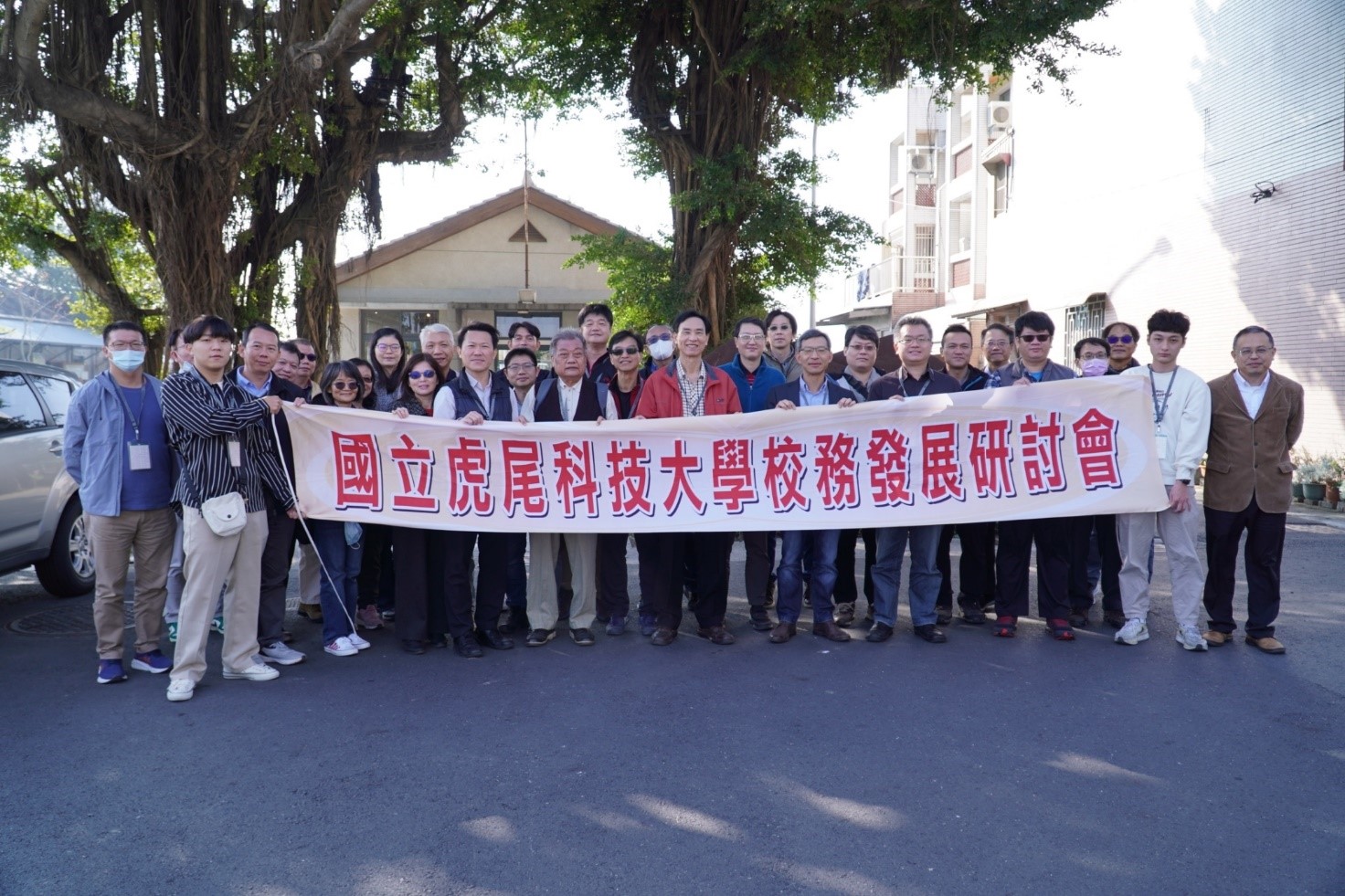
The University’s 2023 (Academic Year 112) University Affairs Development Symposium, themed “Deepening the Cultivation of Technological Talent and Building a Smart Sustainable Campus,” was led by the President and invited distinguished experts with extensive administrative experience to deliver keynote speeches. The event provided insightful presentations and interactive exchanges for University colleagues. It was successfully held on January 11–12, 2024, in Pingtung.
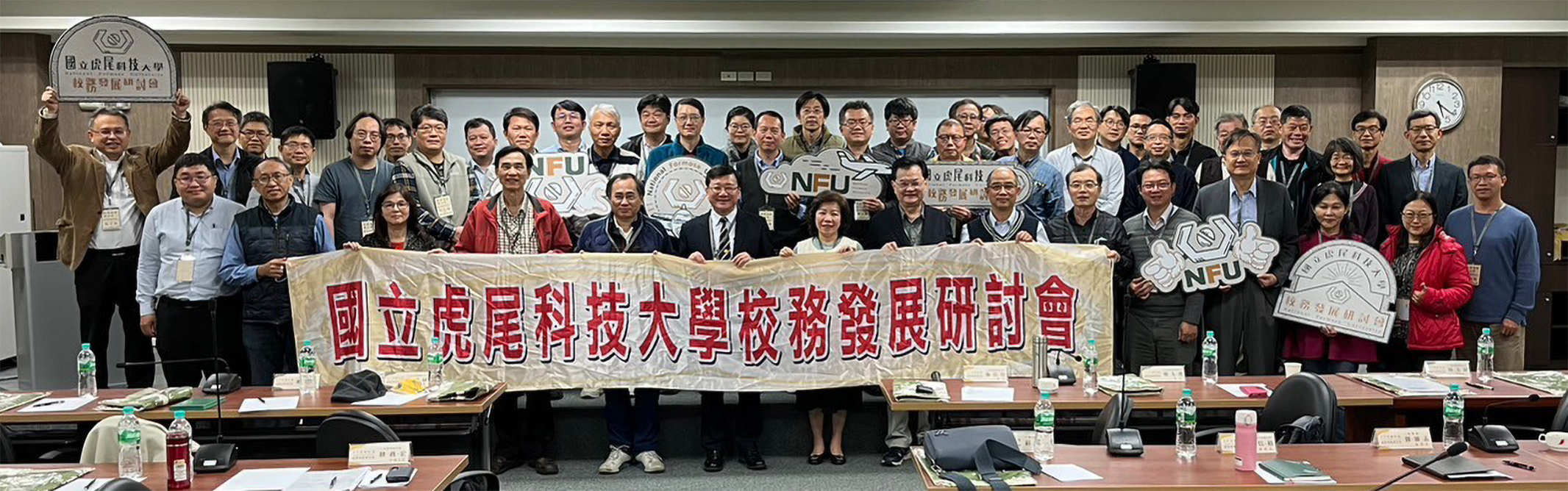 |
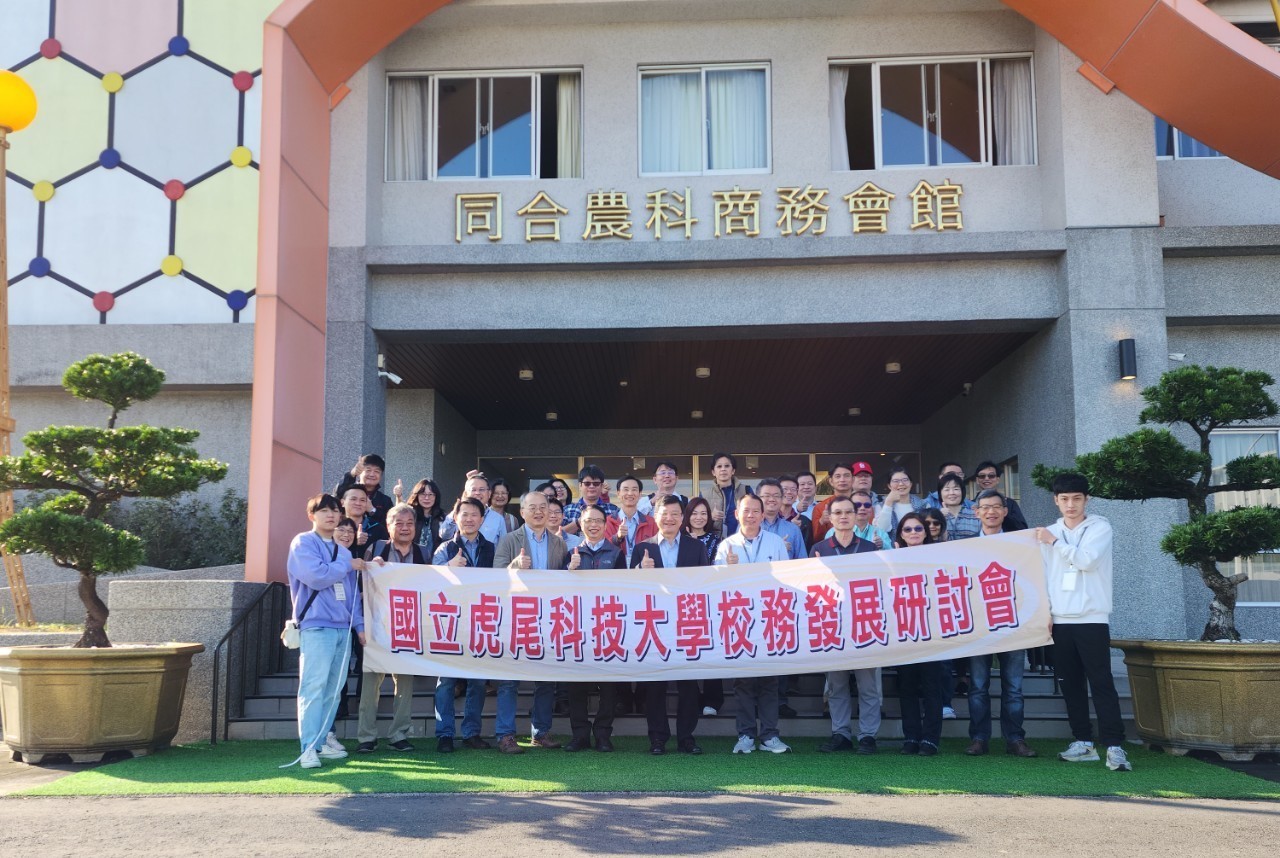
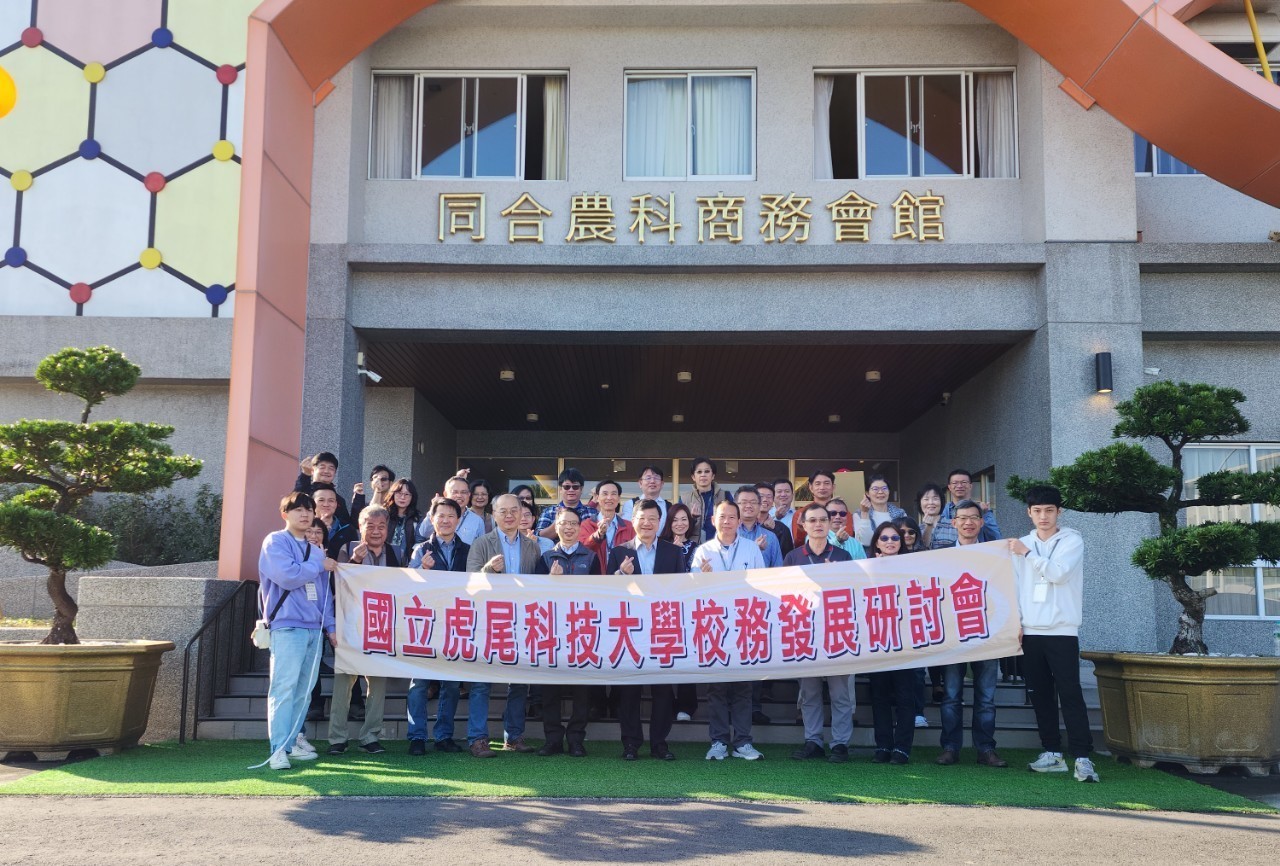
Group Photo
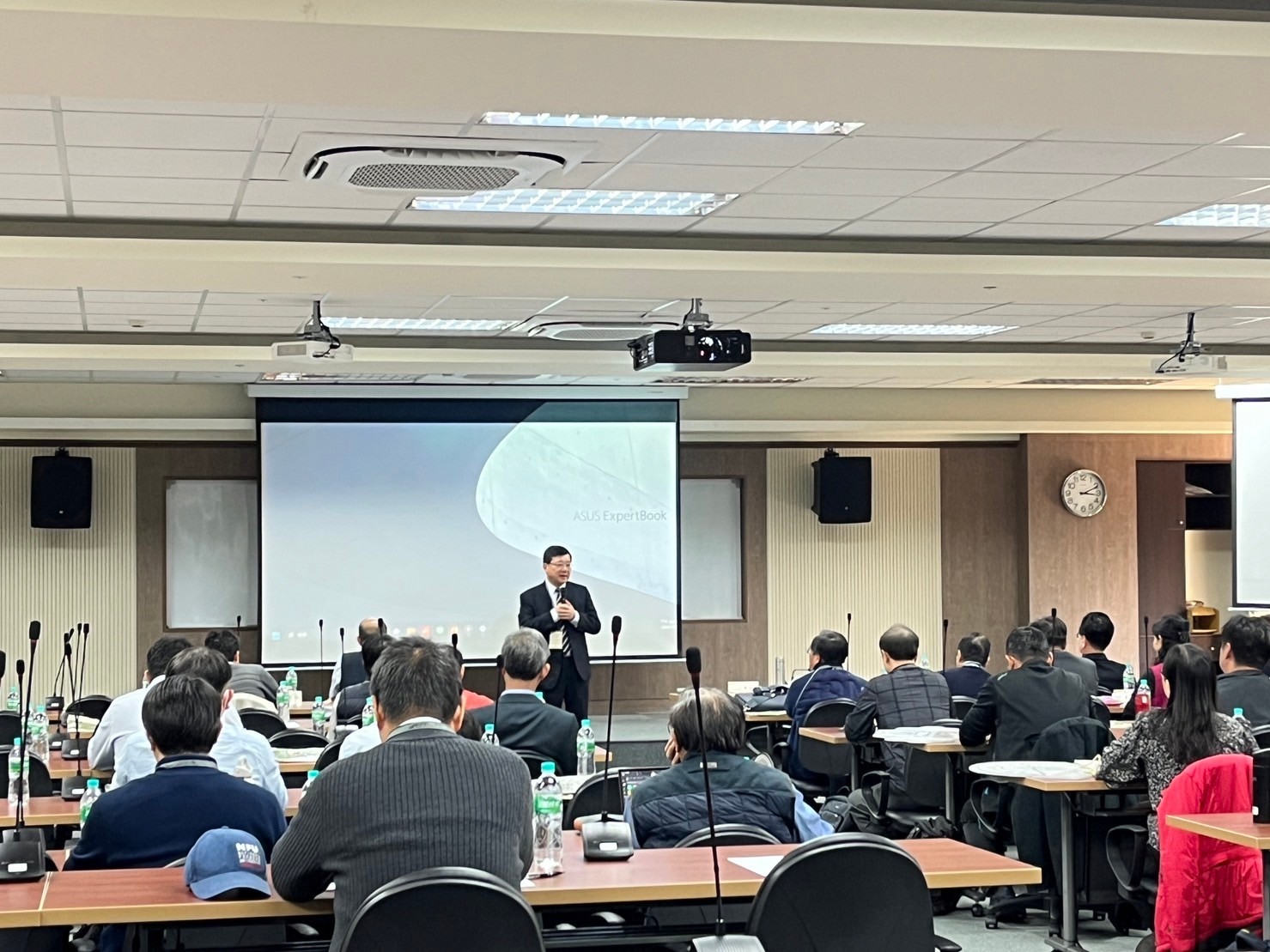
President’s Remarks
Director Cai Wen-Kai of the University Admissions Office delivered a presentation on “Admissions Strategies and Current Status.” He analyzed recent results of the four-year technical program admissions, highlighted current challenges and issues, and shared recent strategic changes. Many department heads engaged directly with him for face-to-face exchanges.
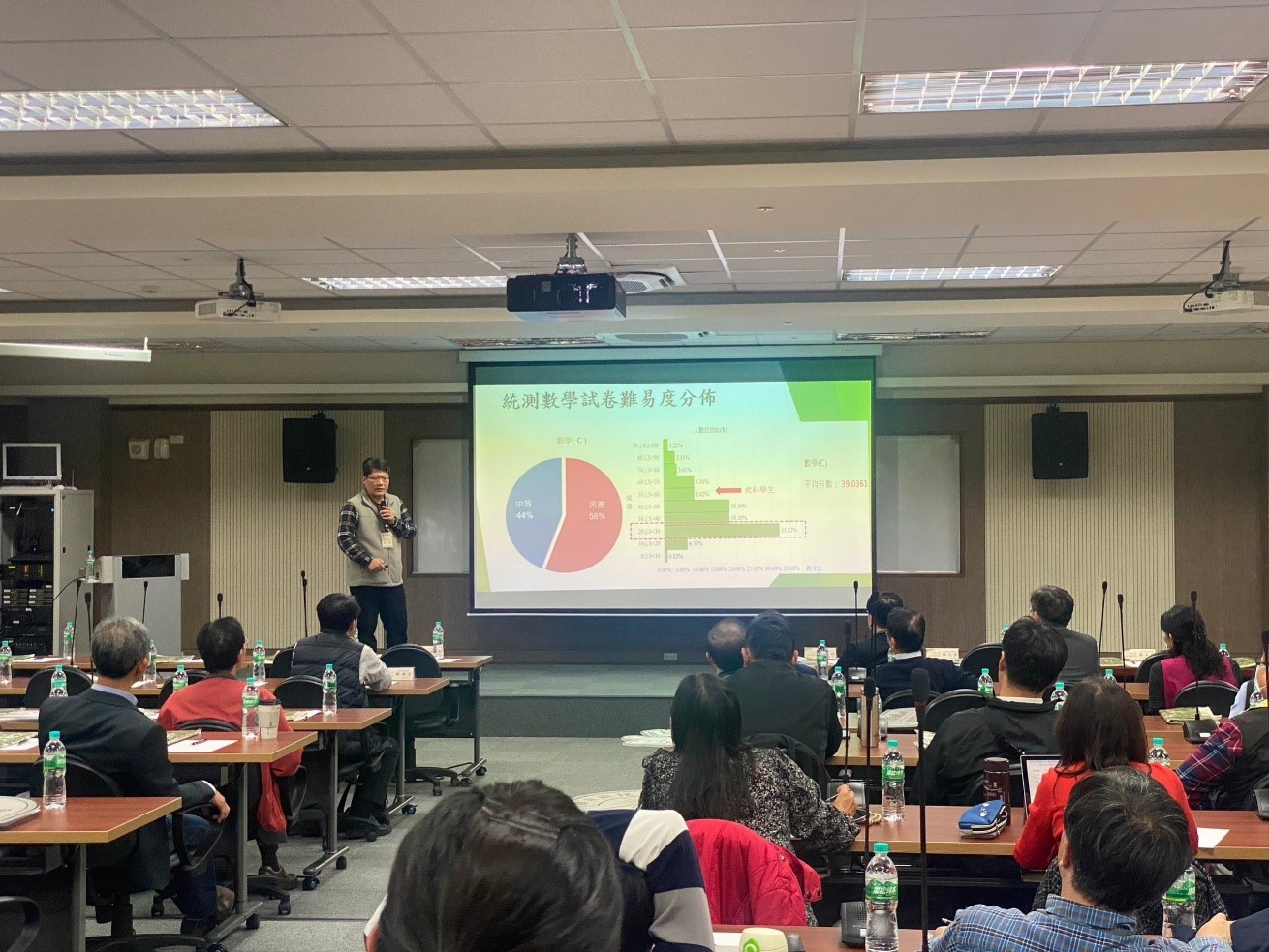
Live Presentation by Director Cai Wen-Kai
Director Cai also forecasted a potential drop in the Electrical Engineering Department enrollment rate this year and shared University-level measures for admissions strategy:
1. The Admissions Office coordinates and consolidates selection brochures for each department.
2. Focus on precise talent selection rather than a broad, random approach.
3. Incentivize with flexible salary rewards.
He concluded with an analysis of the current status based on joint registration ranking: “Exercise cannot make us young again, but it slows aging; Admissions cannot reverse our situation, but it can slow decline!” 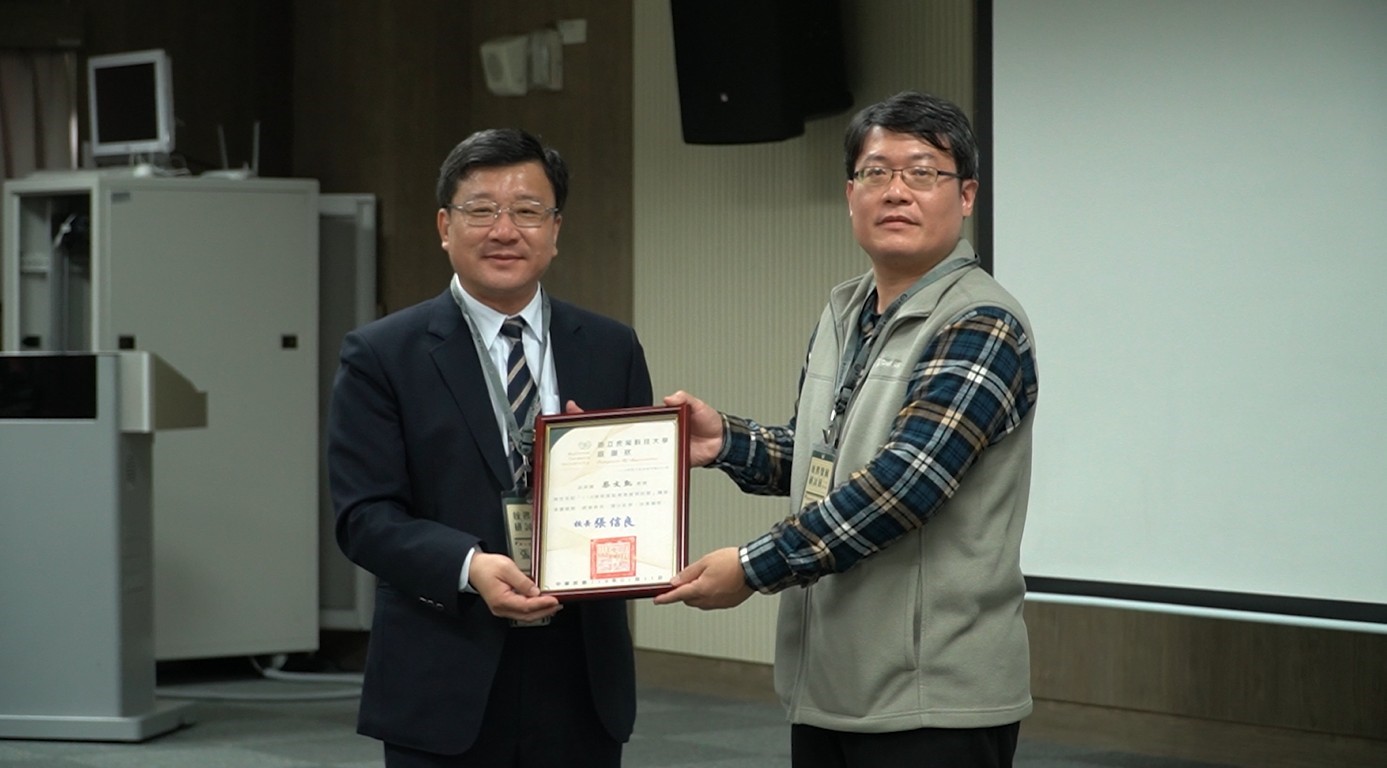
Presentation of Certificate of Appreciation to Director Cai Wen-Kai
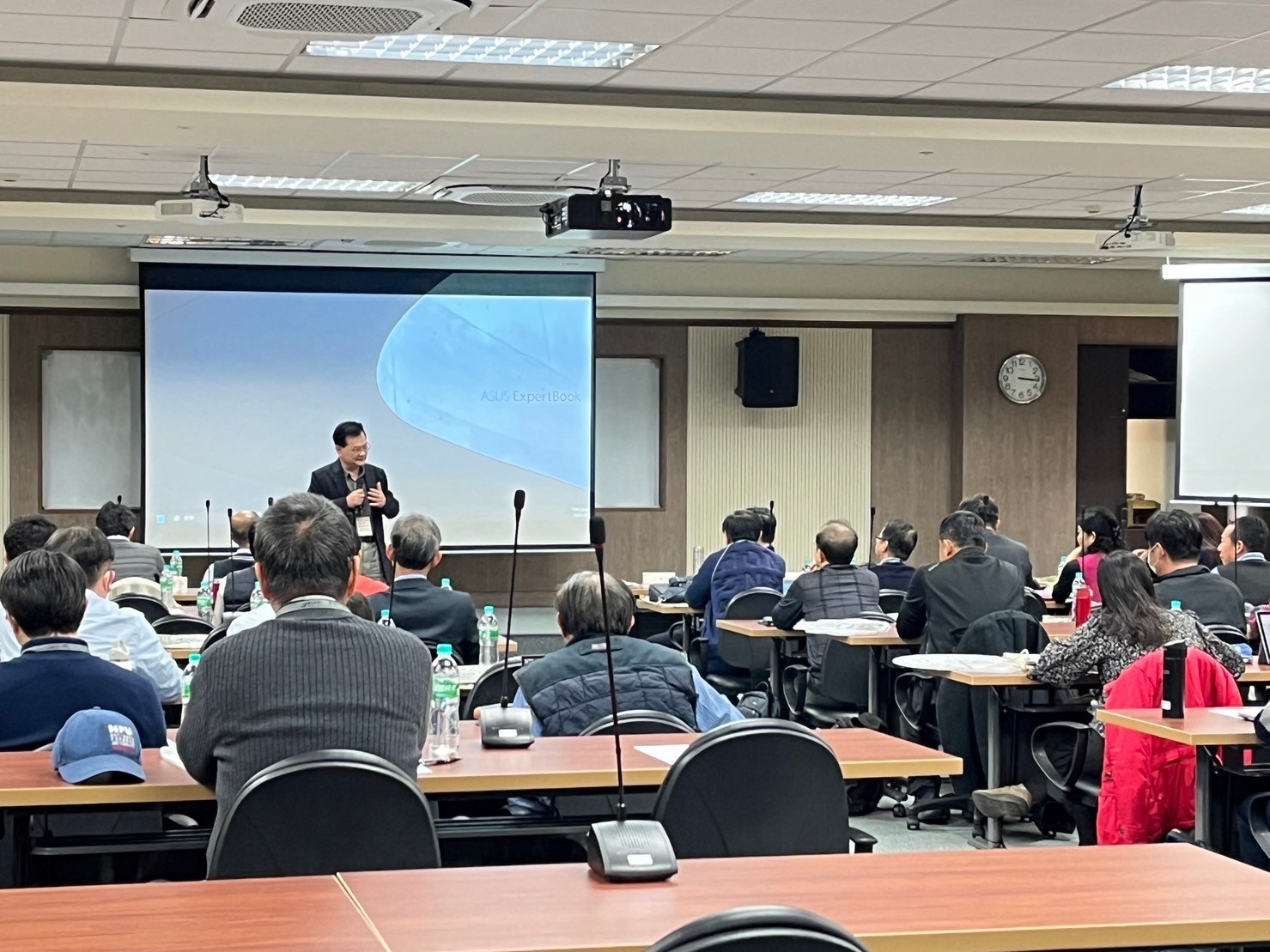
Live Presentation by Honorary Professor Su Yu-Long
The USR Executive Team from National Chi Nan University, including Honorary Professor Su Yu-Long, Professor Cai Yong-Bin, and Director Chen Gu-Fan, attended the symposium to share valuable experience. Professor Su briefly summarized the USR plan from the pilot phase to subsequent phases. Professors Cai and Chen presented on “Green Shui-Sha-Lian Sustainable Value and Talent Cultivation Upgrade Plan: Technology X Circular Economy X Net Zero” in five parts: “USR Plan Overview,” “Puli Smart Bamboo Environment Continuation Practices,” “Water and Ecology Axis,” “Water Environment Education Axis,” and “Cross-School Resource Cooperation and International Axis.” They explained Chi Nan University’s USR achievements, starting from post-921 earthquake relocation to National Taiwan University, and how to coexist and thrive with local communities. The program focused on sustainable agricultural development, optimizing water and electricity usage to reduce environmental impact, and enhancing water safety. AIoT technology was applied to solve agricultural water shortages during extreme weather, gaining media exposure and business opportunities. Cloud-based equipment program modifications reduced PLC on-site service costs, supporting local industries and creating a green economy.
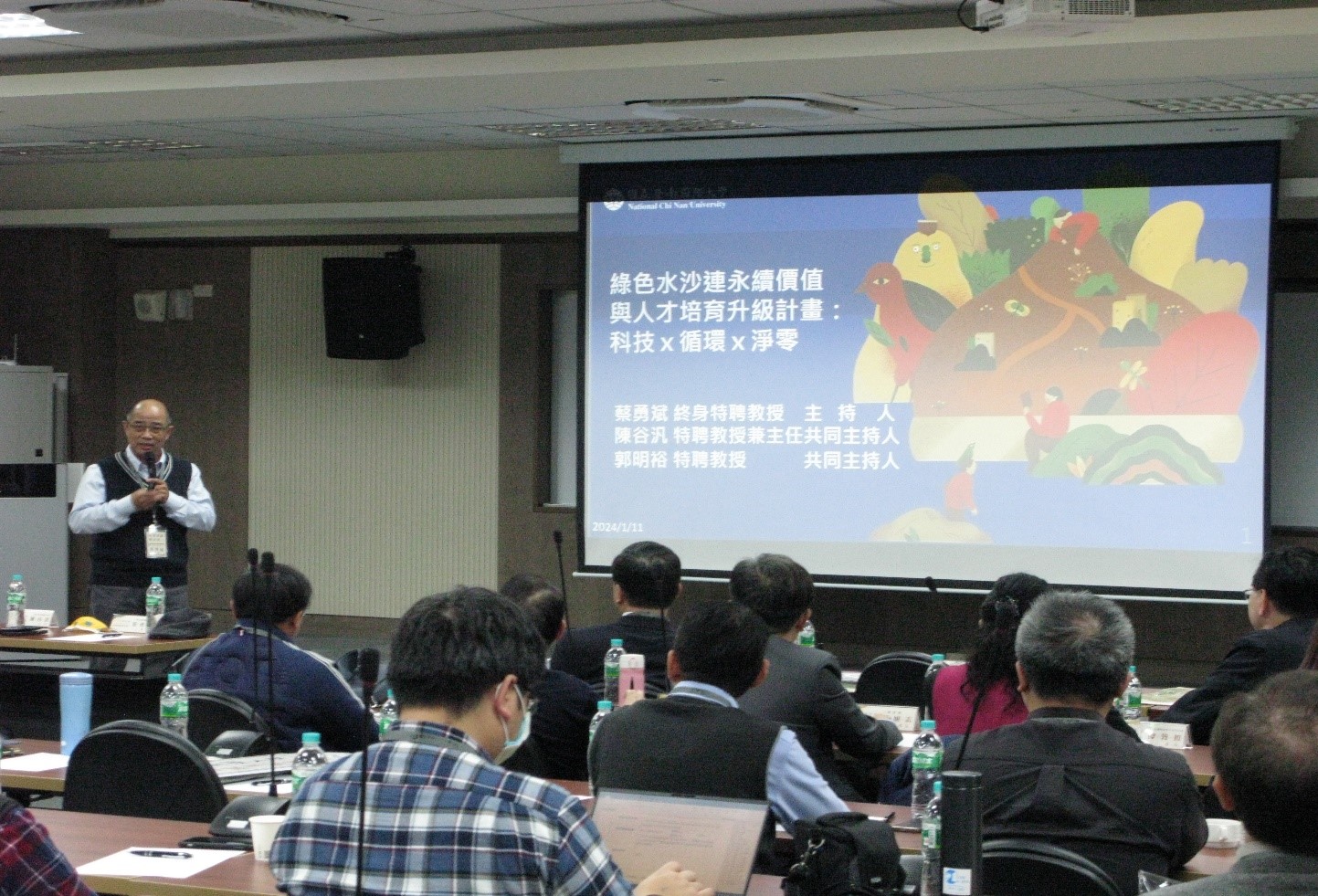
Live Presentation by Professor Cai Yong-Bin
The USR plan emphasizes community ecological sustainability and Satoyama spirit in the Shui-Sha-Lian region, serving as a practical platform for exploring sustainable environmental issues. Presentations highlighted the expansion of Taomi experience to the Centipede Community, long-term ecological engagement, training local ecological conservation talents, butterfly surveys in the Centipede Community, and rebuilding butterfly habitats planted in 2019. The team demonstrated how to become educators for water and urban development while promoting water environment protection.
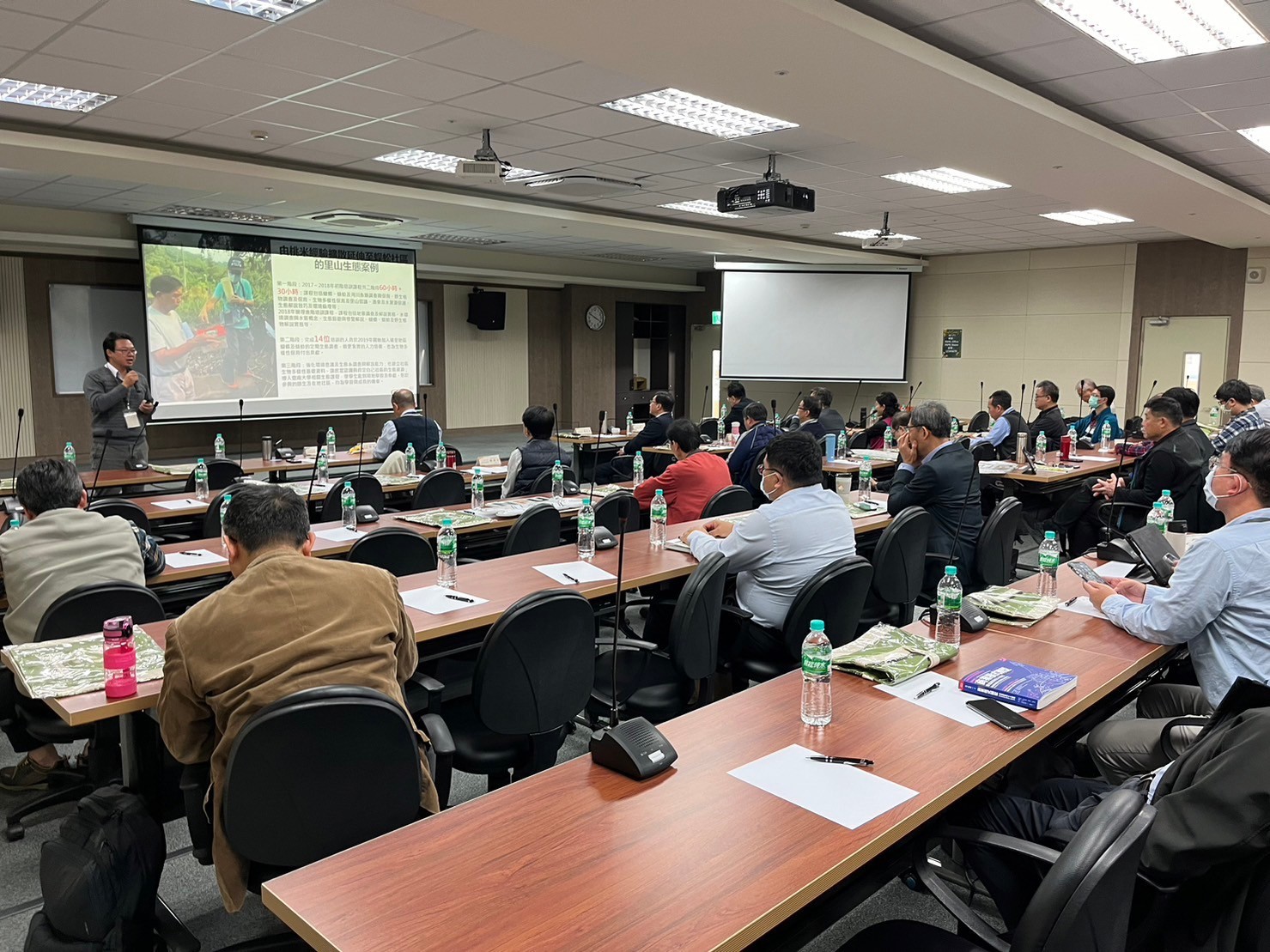
Live Presentation by Director Chen Gu-Fan
The speakers also shared the recognition of the USR team by stakeholders, with exchanges with over 50 universities, signing cross-school USR teacher professional community MOUs, and demonstrating student participation in STEM education in rural schools. Internationally, students engaged in talent incubation and linked environmental education to SDGs and green university indicators. Short-, medium-, and long-term goals were formulated, and the USR team assisted with clean water facilities in Cambodia to meet the needs of 2,000 residents, providing a model for the University to follow.
Professor Su shared key strategies for developing USR plans, requiring each college (including the General Education Center) to propose at least one project. Success depends on deans’ academic status and communication skills. USR success is tied to community engagement, and new plans should strengthen carbon credit elements. When addressing University support issues, the importance of local connections, talent cultivation (PhD students, postdocs, project faculty), and diversified promotion was highlighted. Adjusting faculty appointment and promotion policies, reducing teaching hours, offering salary incentives, and encouraging faculty contributions are critical to achieving meaningful outcomes, with Chi Nan University’s successful practices as a reference.
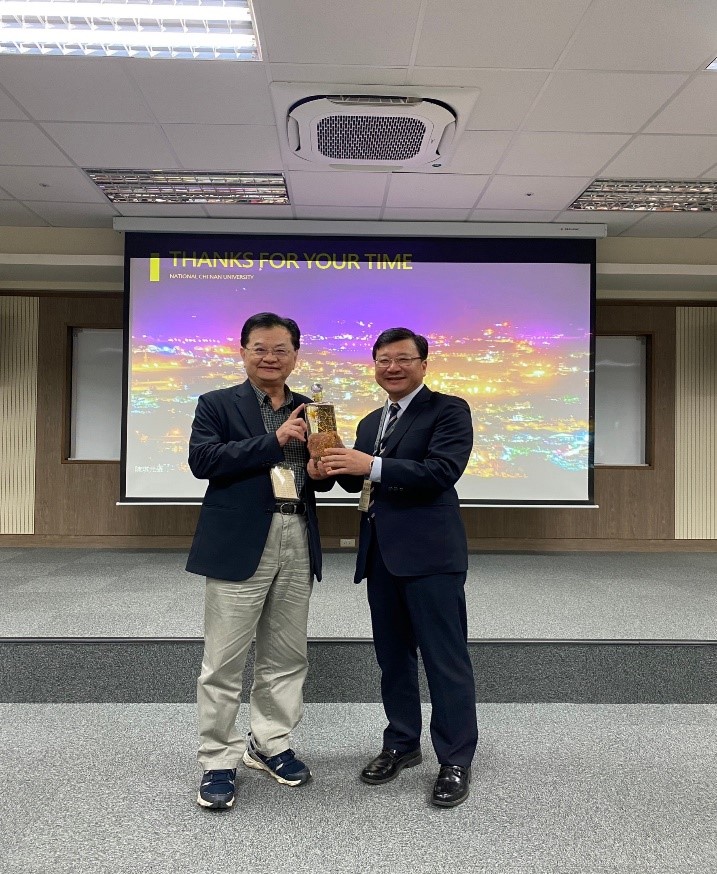
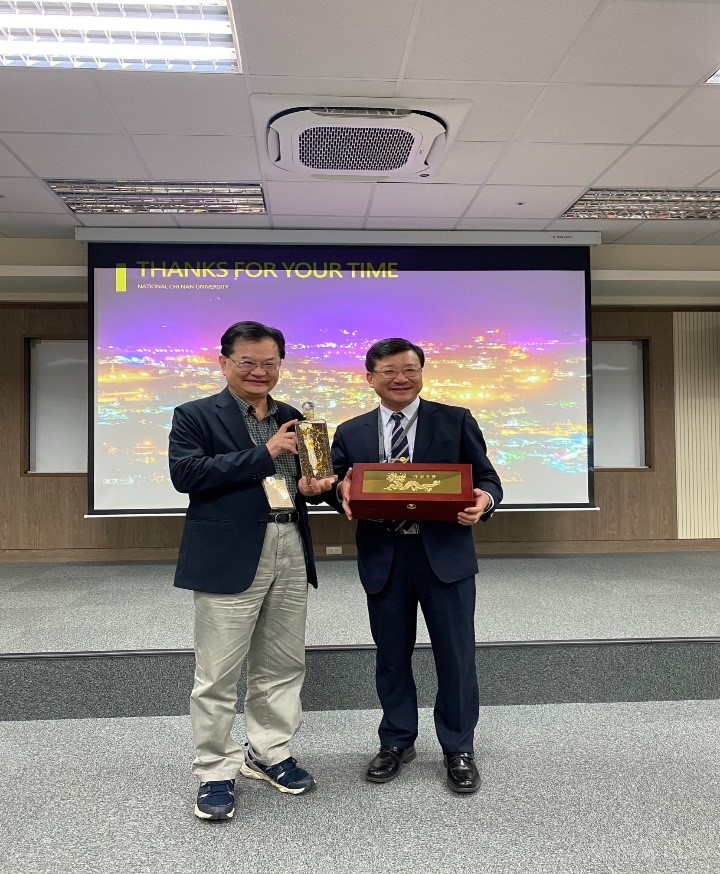
Presentation of Souvenir to the Chi Nan University Team
Director Yang Yu-Hui of the Ministry of Education’s Department of Technical and Vocational Education attended the symposium to provide guidance. Her presentation, “Current Status and Recommendations for National Formosa University Affairs,” encouraged colleagues to “be prepared at all times so that opportunities can be seized when the time comes.”
Director Yang provided ten key recommendations for the University:
1. Enhance students’ professional practical skills: Continue aligning curricula with industry needs, strengthen off-campus internships, and encourage participation in competitions and certifications. Monitor internship content to ensure proper guidance.
2. Promote innovative teaching by faculty: Monitor teaching workload to maintain teachers’ motivation for innovation. Encourage participation in Teaching Practice Research Projects and innovative course models to enhance teaching effectiveness. Align higher education courses for continuity.
3. Improve students’ interdisciplinary learning abilities: Consolidate course resources, strengthen interdisciplinary learning strategies, and introduce cross-domain resources to students from departments with low participation to prepare for future industry needs.
4. Develop innovation and entrepreneurship courses: Increase offerings, integrate potential teams, and guide students in innovation and entrepreneurship initiatives.
5. Improve computational thinking and programming skills: Continue strengthening students’ logical thinking and programming abilities to enhance employability.
6. Enhance Chinese reading and writing skills: Use innovative teaching methods and public issues, and assess students’ progress with appropriate evaluation methods.
7. Improve professional (workplace) foreign language skills: Encourage faculty to teach in English, build English learning environments, integrate innovative methods, and evaluate student progress. Emphasize workplace English even if EMI is not mandatory for all departments.
8. Optimize faculty quality and student–faculty ratio: Strategically recruit talent, use higher education funding, and maintain technical university characteristics.
9. Enhance faculty industry experience: Encourage faculty to engage in professional training or research to strengthen industry–academia linkage.
10. Increase proportion of professional and technical faculty: Hire award-winning technical instructors to enhance student competitiveness.
Director Yang emphasized the use of Institutional Research (IR) to track graduate performance and employment, provide feedback for curriculum adjustments, support students at risk of dropping out, and leverage University advantages to assist industry workforce shortages. Social responsibility should extend beyond MOE USR programs, with the University establishing its own USR initiatives, such as joint industry-academia programs and 5+2 programs. Finally, she encouraged balancing industry needs with University characteristics and continuing efforts in “consensus building, department adjustments, curriculum development, and social responsibility.”
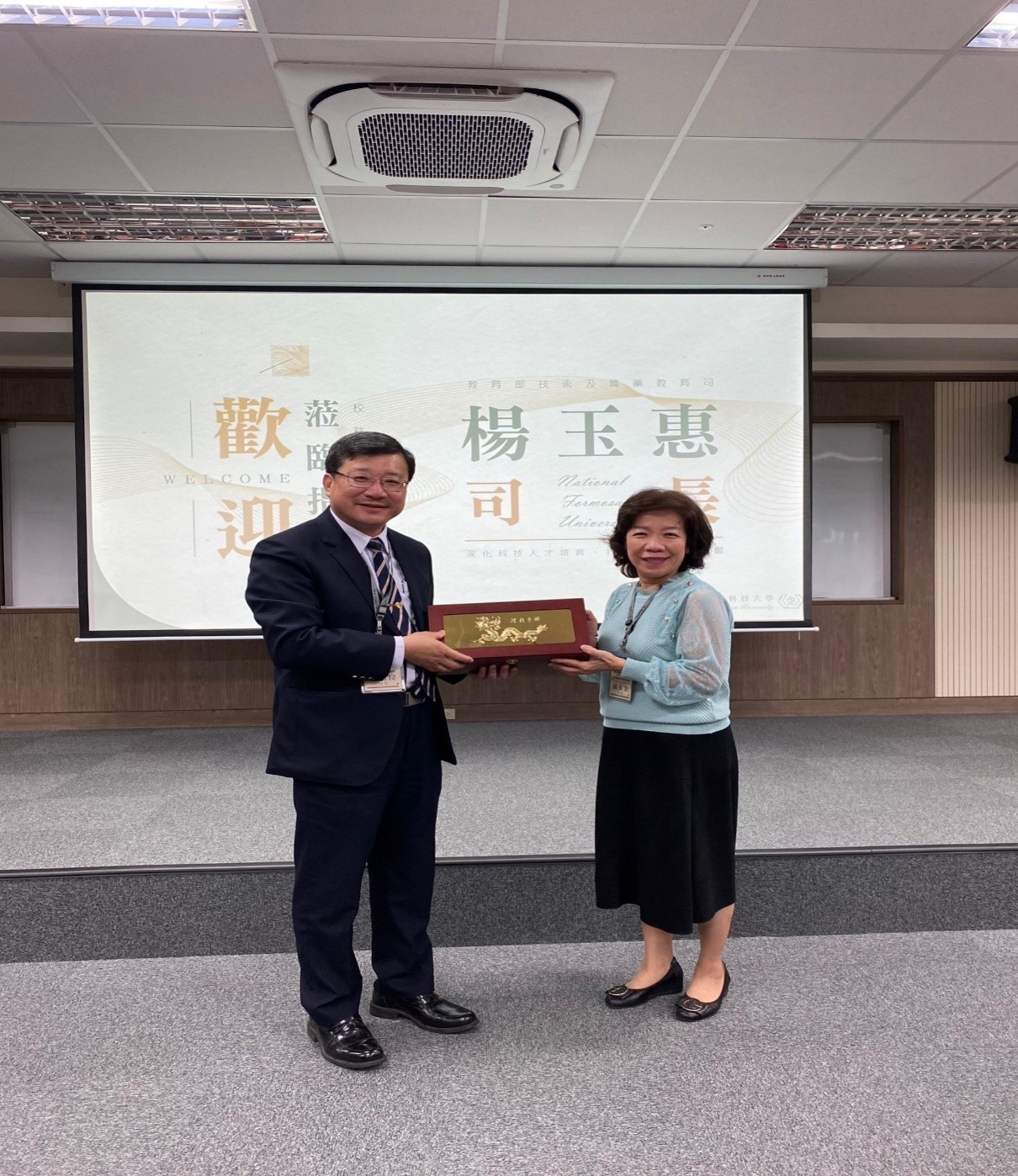
Presentation of Souvenir to Director Yang Yu-Hui
The symposium, guided by Ministry officials, visiting University teams, and internal administrators, combined quantitative data with real-world examples, enabling participants to understand macro-level changes and explore new insights. The lectures challenged conventional thinking, opened new perspectives, and provided practical advice and solutions for University development.
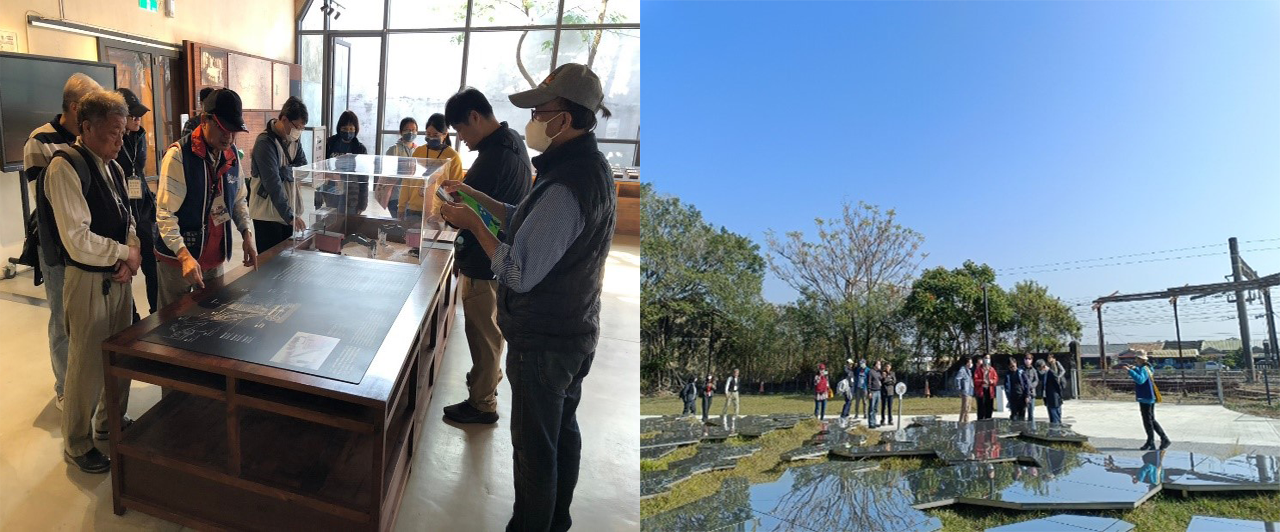
Cultural and Leisure Education Visit – Longtian Cultural Heritage Education Park
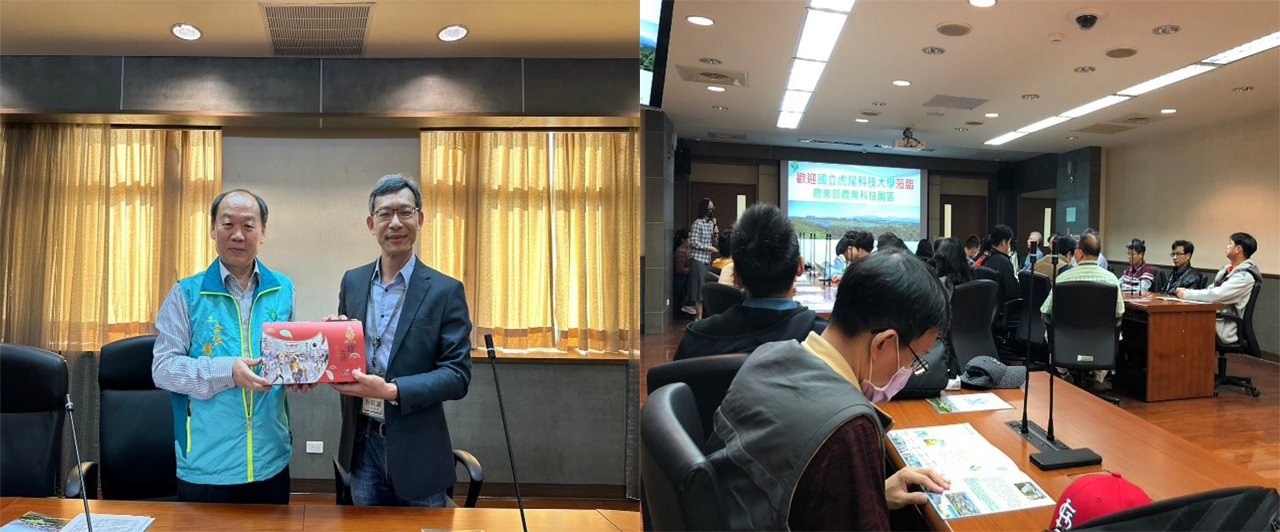
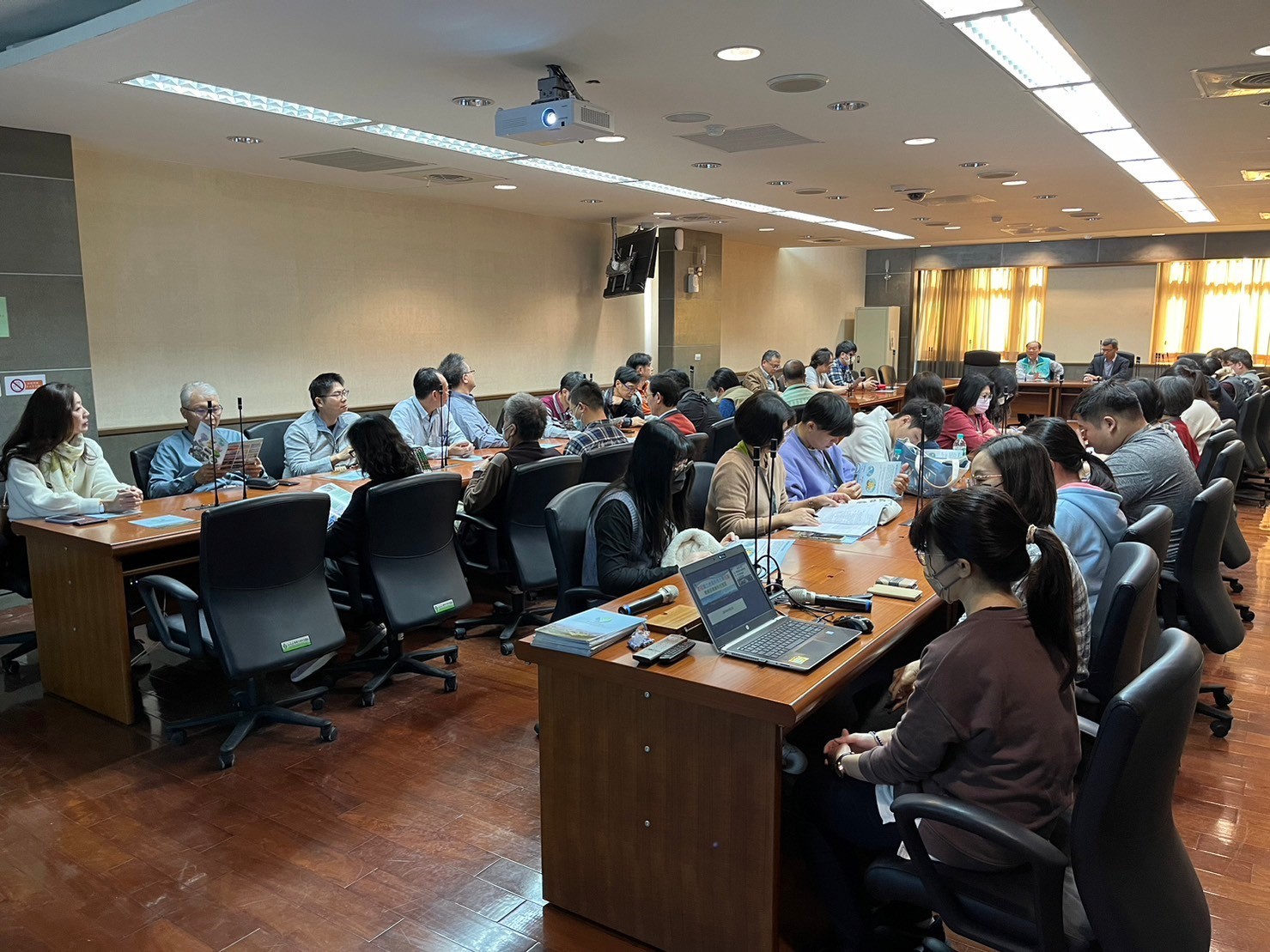
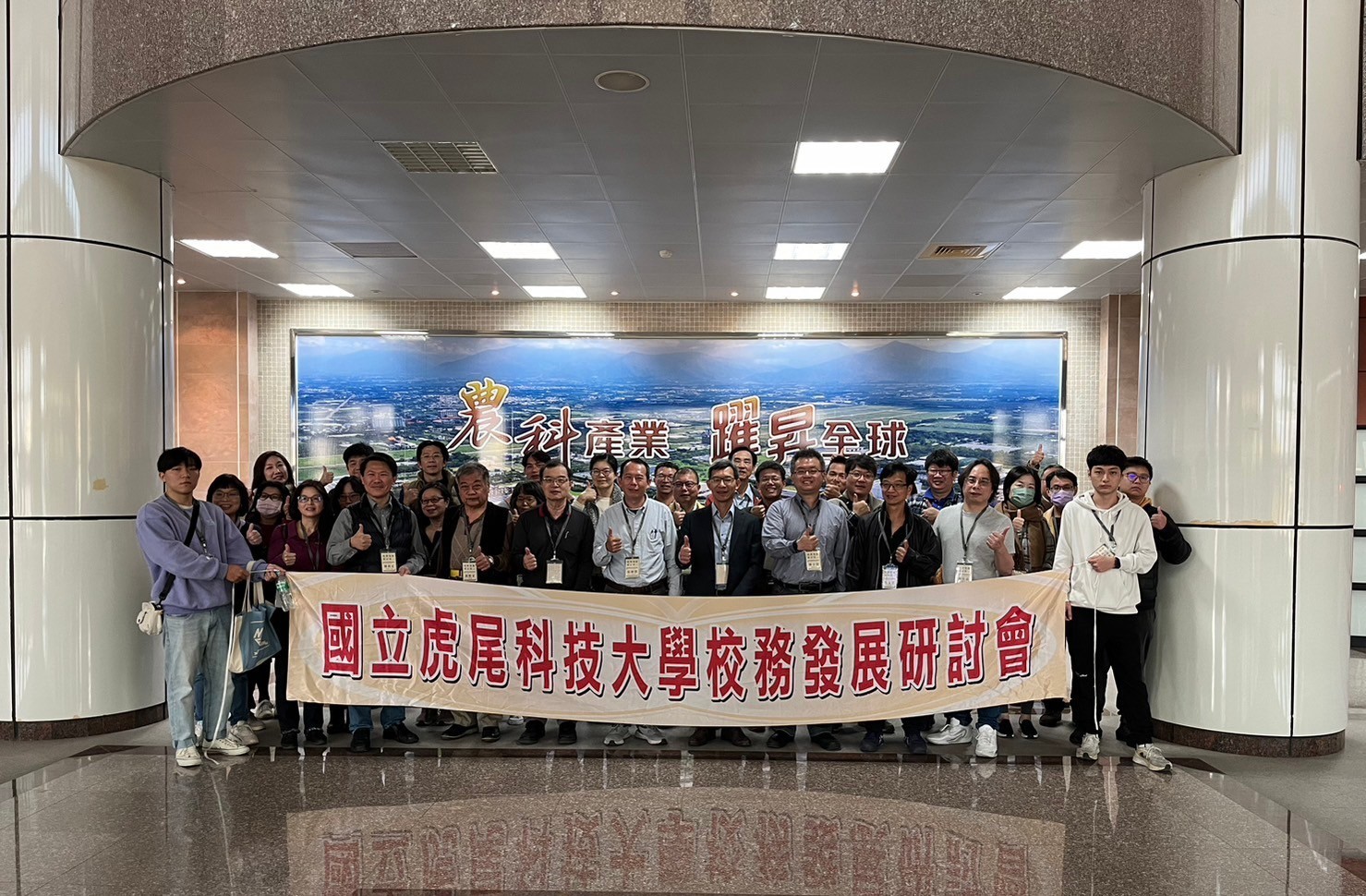
Agricultural Industry and Environmental Education Visit – Agricultural Technology Park Management Center
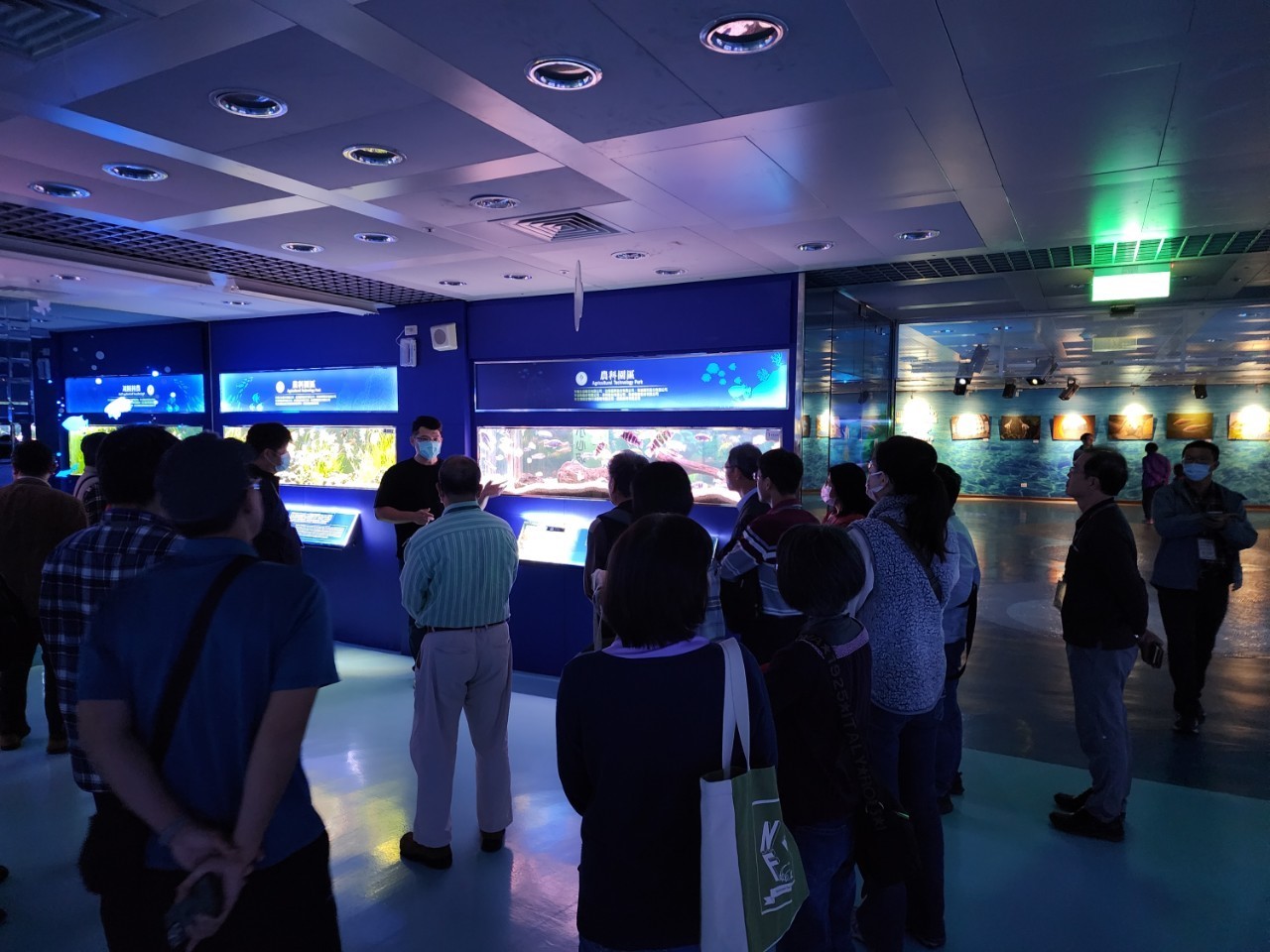
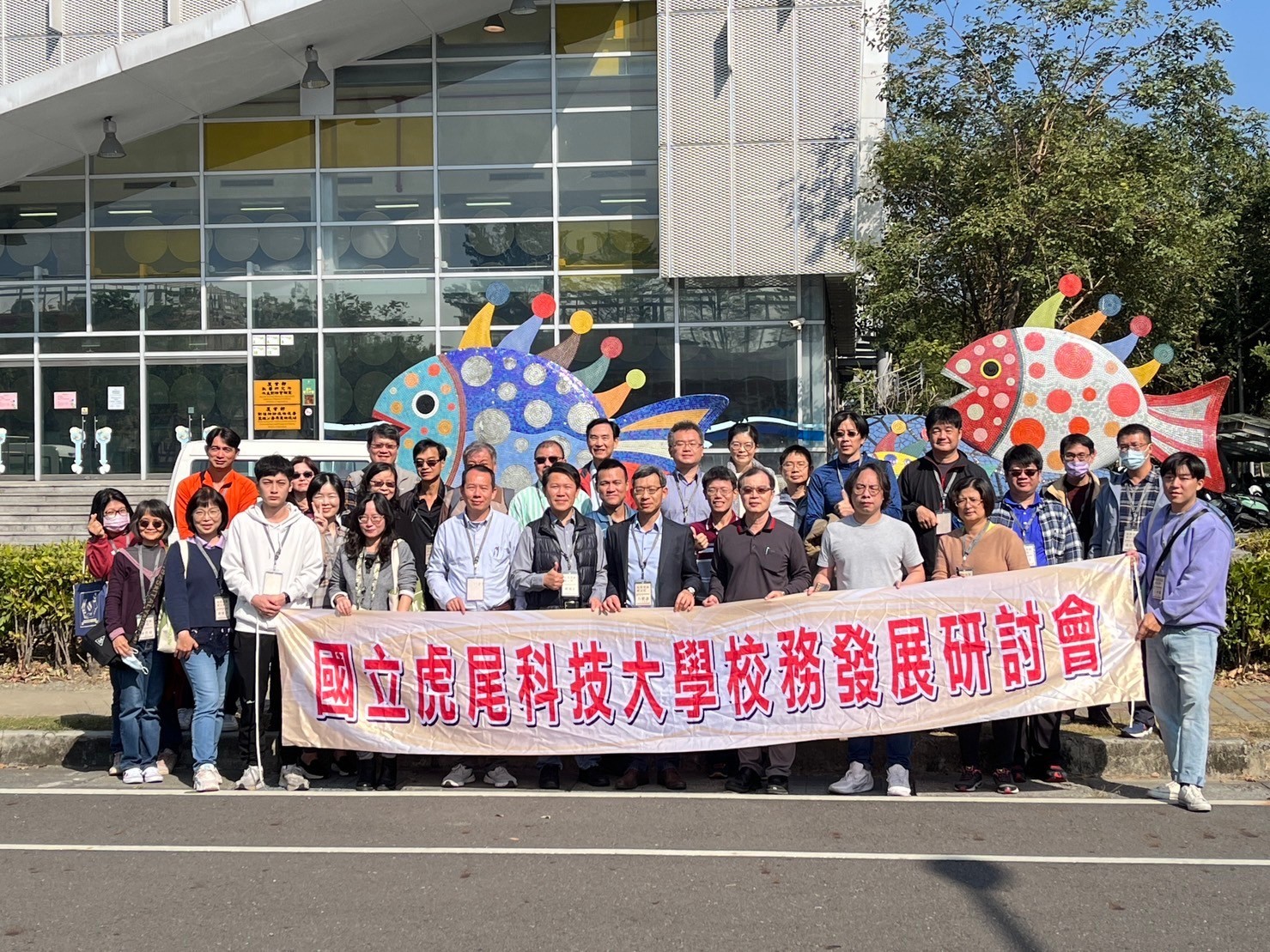
Agricultural Industry and Environmental Education Visit – Aquatic Animal Exhibition Hall
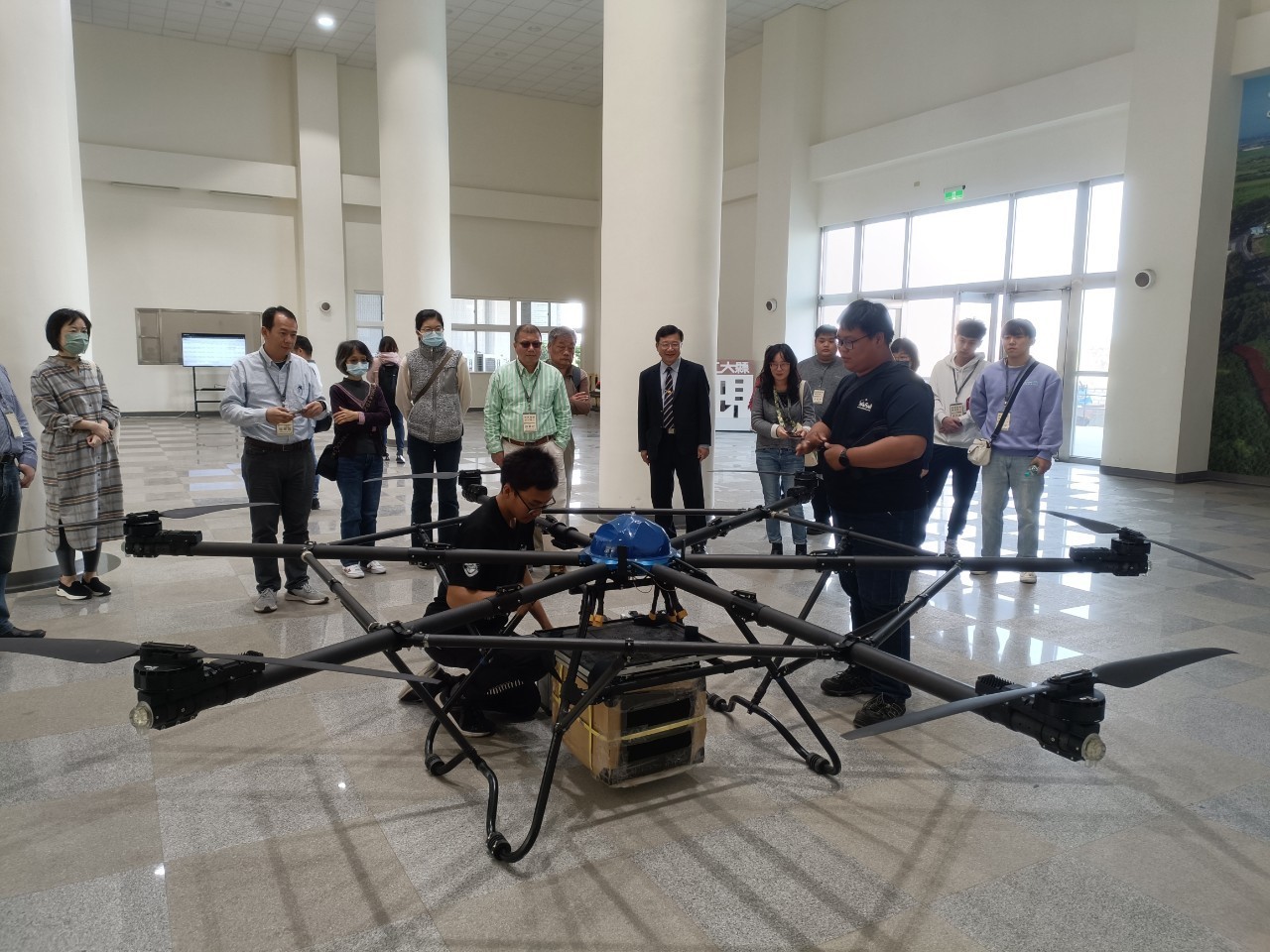
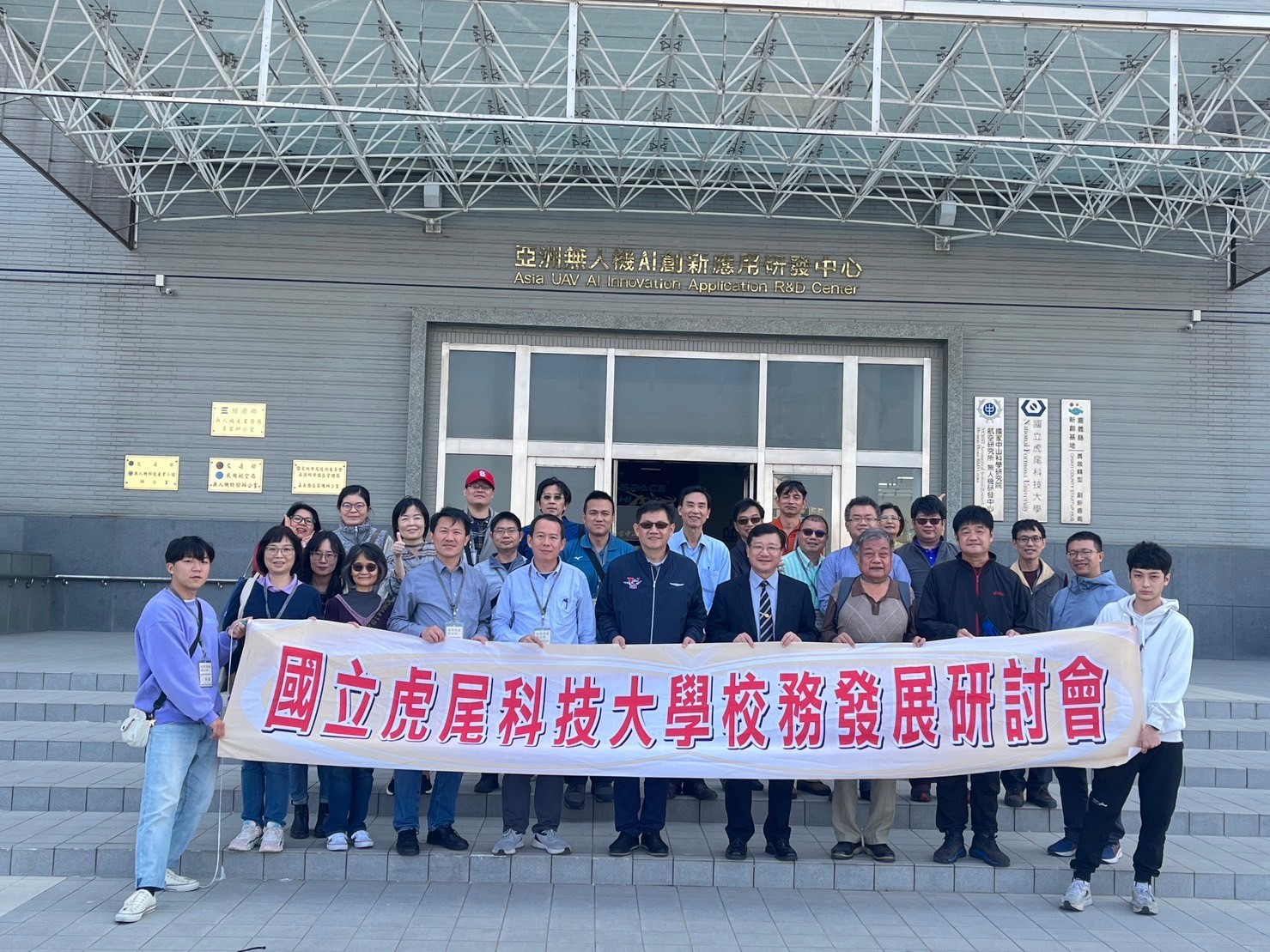
Asia UAV AI Innovation Application R&D Center On-Site Visit
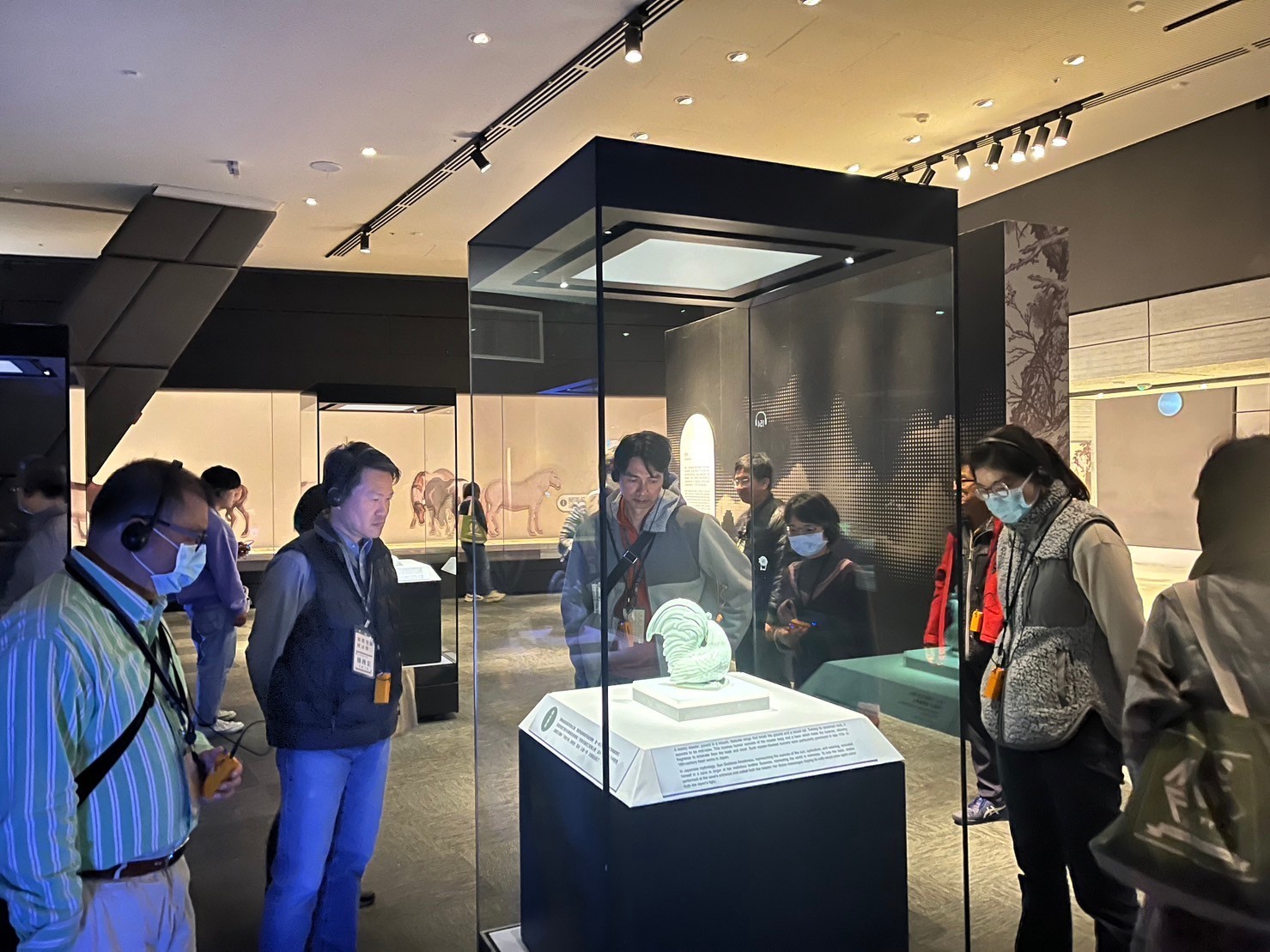
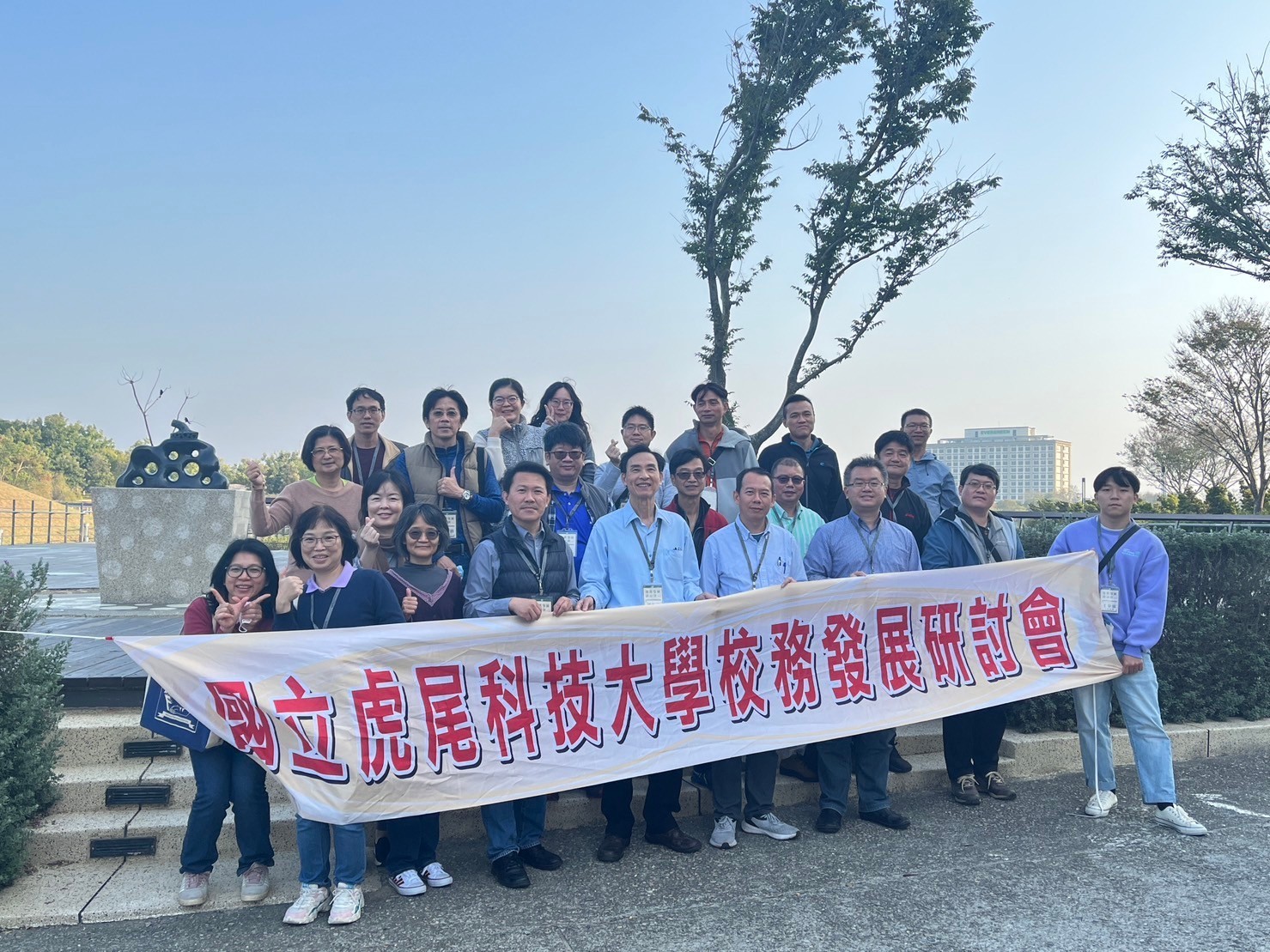
Cultural and Leisure Education Visit – Southern Branch of the National Palace Museum